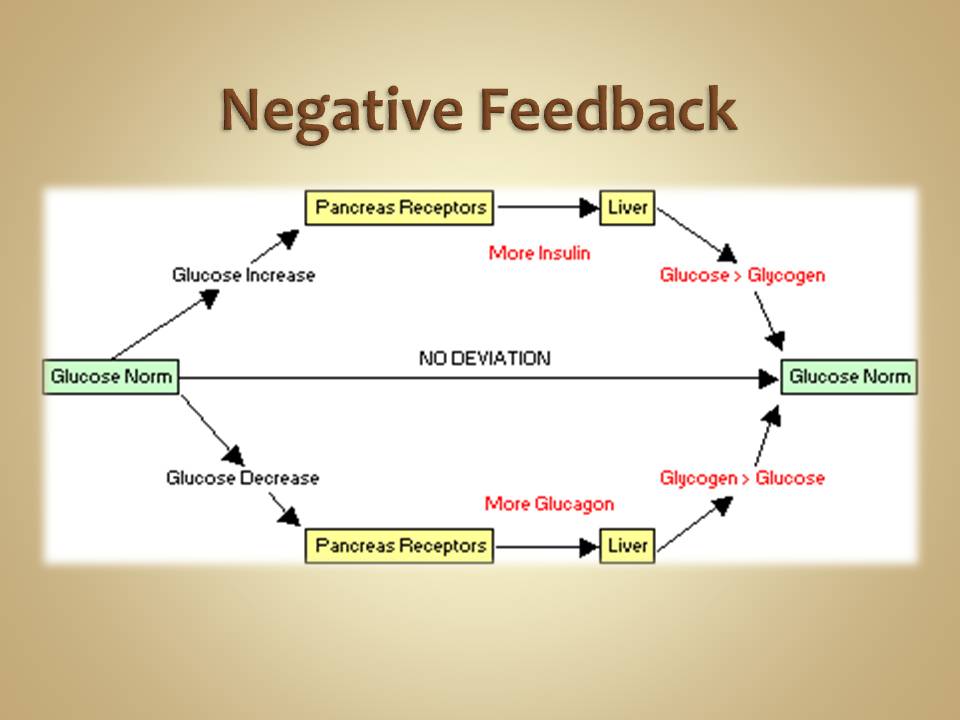
Glucose is important for healthy functioning because it is required for the formation of ATP, the molecule of energy transfer in our bodies. Two important hormones for blood glucose regulation are insulin and glucagon. Insulin is secreted by beta cells while alpha cells secrete glucagon. As the food we eat is broken down, our blood sugar rises due to the carbohydrates. In order to avoid serious problems such as kidney and cardiovascular damage, blood sugar levels have to be decreased.
Friday, April 29, 2011
Negative Feedback and Blood Glucose Regulation
Glucose is important for healthy functioning because it is required for the formation of ATP, the molecule of energy transfer in our bodies. Two important hormones for blood glucose regulation are insulin and glucagon. Insulin is secreted by beta cells while alpha cells secrete glucagon. As the food we eat is broken down, our blood sugar rises due to the carbohydrates. In order to avoid serious problems such as kidney and cardiovascular damage, blood sugar levels have to be decreased.
Thursday, April 28, 2011
Don't Be Soooo Negative!!
What does an air conditioner have to do with a negative feedback loop you ask? Actually, more than you would think! Generally, an air conditioner has a thermostat that you set to a specific temperature. Throughout the day and especially during the summer, your home heats up to the point where it gets warmer than the temperature set on your air conditioner thermostat. As the temperature gets to hot, the air conditioner kicks on and cools the house to the set temperature. When it reaches that set temperature, the air conditioner turns off and the process continues again. This system ensures that your home is never too hot or too cold! A negative
feedback loop in our bodies occurs much like an air conditioner. One definition states that a negative feedback loop is the process of shutting bodily systems off once a set level is achieved, exactly like an air conditioner!! In the body, a negative feedback loop occurs in response to a physiological change which triggers a hormone release. The hormone rise triggers the endocrine system to STOP producing the hormone once it reaches a certain level. This negative feedback prevents the overproduction of hormones which could ultimately lead to disease if the hormone levels stay high for an extended period of time.
feedback loop in our bodies occurs much like an air conditioner. One definition states that a negative feedback loop is the process of shutting bodily systems off once a set level is achieved, exactly like an air conditioner!! In the body, a negative feedback loop occurs in response to a physiological change which triggers a hormone release. The hormone rise triggers the endocrine system to STOP producing the hormone once it reaches a certain level. This negative feedback prevents the overproduction of hormones which could ultimately lead to disease if the hormone levels stay high for an extended period of time. An example of
a negative feedback loop in our bodies is after you eat a HUGE piece of birthday cake. After eating the high amount of sugar, our blood sugar rises. After it rises, the endocrine system signals the pancreas to release insulin. The insulin is release from the pancreas which travels through the bloodstream to cells. This insulin helps the body cells to take in glucose which helps to lower the amount of sugar in the bloodstream. After the blood sugar lowers and the glucose levels fall, the insulin release is inhibited. Now you can see how an air conditioner and our bodies are similar! Who would have thought...
a negative feedback loop in our bodies is after you eat a HUGE piece of birthday cake. After eating the high amount of sugar, our blood sugar rises. After it rises, the endocrine system signals the pancreas to release insulin. The insulin is release from the pancreas which travels through the bloodstream to cells. This insulin helps the body cells to take in glucose which helps to lower the amount of sugar in the bloodstream. After the blood sugar lowers and the glucose levels fall, the insulin release is inhibited. Now you can see how an air conditioner and our bodies are similar! Who would have thought...One of the questions I got wrong on the assessment test was one about the drug Taxol and its role in mitosis. Although I had heard about this drug before, I got the question wrong because I thought it would inhibit anaphase and not necessarily the mitotic spindle. Because I didn't really understand the mechanism that makes Taxol work, I wanted to research it a little more.
Taxol, an anti-cancer drug, is isolated from the Pacific Yew Tree. It was originally isolated from the bark but was found in small amounts in the needles and cones as well. The relative amount able to be isolated from these trees was fairly minute and therefore many trees were used to get enough for one patient's treatment.
A couple of the cancers that taxol can be used to treat include breast cancer and lung cancer. The way Taxol works is to inhibit the cell division and growth of the cancer cells. It affects the microtubules involved in mitosis and can therefore inhibit mitosis of the cells.
Taxol is fairly expensive to extract and purify from the Pacific Yew Tree. Many different researchers have been trying to figure out new ways to synthesize this important drug and to make it more available to the general population.
In metaphase of mitosis, there are spindle fibers that attach to the centromeres of the chromosomes so that the chromatids can be moved to opposite poles during anaphase. When taxol is applied to the cells the spindle fibers are interrupted and the cell remains in metaphase. After the cell is in metaphase for a while, apoptosis occurs and the cell dies. This is why taxol is such a good cancer treatment because it can inhibit cell division and eventually kills the cancer cells. The end. :)
Friday, April 1, 2011
Endosymbiotic Origins
| Eukaryotic Cell |
| Prokaryotic Cell |
There is a large amount of evidence in support of this theory. For example, both mitochondria and chloroplasts have their own DNA which is found in one circular molecule not associated with histones. These organelles also have their own transfer RNAs, ribosomes, and other molecules needed for transcription and translate. Also, mitochondria and chloroplasts both divide in a process more similar to that of binary fission which occurs in prokaryotes. Mitochondria and chloroplasts have ribosomes which are more similar to prokaryotic ribosomes in terms of nucleotide sequence, size, and antibiotic sensitivities.
You might be wondering how and why this would happen. As far as how, the smaller prokaryotic cells most likely entered the eukaryotic cells as internal parasites or undigested prey. From there a mutual relationship developed, benefiting both cells. The smaller cells gained protection in an increasingly oxygen enriched environment from the eukaryotic host, while the host was able to use nutrients from the photosynthetic prokaryote. Both cells became increasingly dependent on the benefits gained from the relationship until they were no longer separate organisms.
Thursday, March 31, 2011
Tumor Suppressor Genes
Cancer is a deadly disease that affects many families today and I would bet money on the fact that everyone who reads this post probably knows someone who has some form of cancer. A large majority of cancers are caused when something called a tumor suppressor gene becomes mutated and changes the cell cycle, or the process of cell division. In its normal form, a tumor suppressor gene has the ability to regulate when cells are allowed to divide and multiply. When a cell divides, the genetic information in them, DNA, is replicated. During this replication process mistakes can be made and these mistakes are referred to as mutations. The problem of cancer occurs sometimes when there are mutations specific to the tumor suppressor gene. If this gene becomes mutated, the cell no passes mutant genetic information along to daughter cells. The daughter cells multiply exponentially and a cancer tumor forms. Two types of tumor suppressor genes, Rb and p53, often become mutated and lead to different types of cancers. A mutation in Rb, which is located on the 13th chromosome in humans, leads to retinoblastoma, or cancer of the retina. The Rb gene is dominant so there must be two m
utated alleles, or a mutated copy of Rb from both the mother and the father, in order for the cancer to persist. When a healthy, normal copy of Rb is present it interacts with the E2F protein which regulates the S phase, or the part of the cell cycle where DNA is replicated. E2F can only interact with Rb when Rb is phosphorylated, or has a phosphorus on the end of it. A mutated version of the Rb chain is not phosphorylated and can therefore not interact with the E2F protein. Retinoblastoma occurs because mutant Rb can not interact with E2F to stop the S phase of the cell cycle and cancerous cells can occur.
utated alleles, or a mutated copy of Rb from both the mother and the father, in order for the cancer to persist. When a healthy, normal copy of Rb is present it interacts with the E2F protein which regulates the S phase, or the part of the cell cycle where DNA is replicated. E2F can only interact with Rb when Rb is phosphorylated, or has a phosphorus on the end of it. A mutated version of the Rb chain is not phosphorylated and can therefore not interact with the E2F protein. Retinoblastoma occurs because mutant Rb can not interact with E2F to stop the S phase of the cell cycle and cancerous cells can occur. Mutations of another tumor suppressor, p53, causes 50% of cancers and these forms of cancers are the most aggressive and have the highest rates of fatalities. Cancers caused by p53 include bladder, breast, cervix, colon, lung, liver, prostate and skin cancers. The p53 gene is located on chromosome 17 and contains 393 amino acids. A mutation of just one amino acid leads to a loss of function of this gene. The p53 gene has the ability to stop the cell replication process when a mutated or potentially dangerous section of a copied gene is detected. After detecting this mutated section of gene the cell replication process is stopped and the p53 gene signals for cell suicide, or cell death to occur. By ending the cell division process of this specific cell, it essentially stops the growth of a cancerous tumor before it starts.
Mutations in both p53 and Rb have been attributed to the rampant growth of cancers in many patients. Tumor suppressor genes, when they are not mutated, do exactly what their name says; they suppress the growth of cancerous tumors. Another type of gene called a proto-oncogene allow a cell to continue dividing and gives it the "go" signal. When mutated, a proto-oncogene becomes and oncogene and the cell constantly divides without stopping. Therefore an oncogene and a tumor suppressor gene in a cell spells disaster because a mutated tumor suppressor gene allows mutated genetic information to persist in daughter cells and the oncogene continues cell division of cells with these mutated genes at an accelerated rate. Doctors study proto-oncogenes and tumor suppressor genes in order to better understand appropriate treatments they can give to cancer patients.
Tuesday, March 29, 2011
What a Fun-gi
Fungi, the dominant decomposers of most environments, are commonly looked over in most of the required classes that college students have to take. They are a huge part of the Eukaryotic lineage but because many people are mostly interested in animals and how they interact with each other and their environment, fungi are sometimes left in the dark. (No pun intended.)
These important decomposers are involved in degrading many types of material such as dead plants, living or dead woody material, dead animals, animal fecal matter, and other types of organic matter. When I say that fungi are capable of degrading living woody material it may be a new fact that you have not heard before. Some fungi are capable of degrading wood for animals that create nest in the open cavities.
Fungi are also capable of forming symbiotic relationships with plants or with algae. Lichens are a good example of a symbiotic relationship that is formed between fungi and algae. These lichens are so dependent on one another to live that if they were separated, (which is nearly impossible to do anyways) they would not be able to survive on their own. They can also form associations with plant roots and form mycorrhizae. In both of these types of association, lichens and mycorrhizae, the fungi and the algae or plant benefits from the relationship. Not only are they capable of forming good relationships, fungi also form bad relationships such as parasitism to other plants and animals.
Many food processes also use fungi for fermentation. Yeast, a type of fungi is used in many different processes such as alcohol and bread production. So not only do the fungi provide a way to decompose living or dead organic matter, it also provides services in various associations with plants and algae as well as providing food services. It has so many different uses but is still not heavily focused on in various Biology related classes. The processes that most commonly are discussed are the mycorrhizal associations and the lichens. Both of these are very important but fungi also provide many more important services that could be focused on in more depth.
Source: Fungi
Saturday, March 26, 2011
Species Spotlight
Our audio project is a spotlight piece on the Golden-Winged Warbler which may be endangered in the near future.
Tuesday, March 22, 2011
Wednesday, February 16, 2011
Large Lake--Fierce Competitors
Lake Malawi holds many secrets in its deep crevasses that reach up to 700 meters. This lake was formed when the plates that make up the earth's crust tore apart in the eastern part of Africa. This tearing of the earth's crust forms areas called rift zones where land is pulled apart and stretches out much like a warm piece of taffy, leaving a thin crust and valley like area in the center with the ends remaining thick. Malawi is located in a particular rift valley called the Great African Rift Valley. It is the southern most lake in a chain of lakes with a surface area of 38,000 square kilometers. As the 8th largest lake in the world and the 2nd deepest lake in Africa, Malawi is home to many interesting and diverse creatures including the aggressive African cichlids that are often kept as pets in tropical fish tanks.Over a period of a few million years, which is a short time in evolution years, over 22 cichlid species developed with up to 500 individuals in a 50 square mile area. The large amount of different species of the same fish was a result of a process called speciation. Normally, this process occurs when there is only one species of fish, or other animal, in an area where there are many different habitats that can be lived in. In order to reduce competition, or the fight between individuals to get foot or shelter, a member of the species might change their normal preference to fill a new habitat in order to lessen competition. This change occurs over millions of years and eventually the species can no longer mate with the individual that it changed from. Essentially, this is a new species. The cichlid species in Lake Malawi live in an area called the littoral zone which is characterized by a rocky bottom, plant life, and shallow water. The interactions between species, also called interspecific competition, is often studied in these waters in attempt to discover how they partition the habitat for maximum resources.
A process called niche partitioning is often accounted for as the main reason why the diversity of cichlid species has been maintained. Niche partitioning is when members of similar species inhabit different types of habitats in order to lessen competition. It has also been argued that the speciation event of this fish occurred so quickly that members of different cichlid species act as equal. In reality it has been observed male cichlids in Lake Malawi actively guard three
different types of territories from different types of other cichlids. The first territory that is guarded by the male is the feeding territory which is characterized by areas where algae and microbes are attached to rocks. Males guard this territory against many fish of their species and not of their species that feed on similar foods. The second territory is the mating territory. A male will actively and aggressively guard this territory from males of the same species and attempt to attract females of the same species while allowing any species of cichlid to travel through this area as long as they have a different diet. The spawning territory is the third and final territory and it is also the smallest. The male will not allow any fish, whether it be a male or female from the same species, to enter this territory in fear that the area will be jeopardized for future spawning activity. All of this information on African cichlids is just a small piece of the story of and I challenge you to go out and research more!
Snottites are AWESOME!

Cueva de Villa Luz, an extremely interesting cave in Tabasco, Mexico, has piqued my interest in light of a short segment of Planet Earth that we watched in our Limnology class today. Before today I had never heard of this cave before. In actuality I had never heard of anything like the biology and ecology of this cave and the way it works. The water flowing through this cave is acidified by sulfuric acid produced by many different kinds of bacteria that form “snottites” throughout the cave.
After hearing the term “snottite,” I was very curious as to what type of bacteria could be forming these sulfuric acid producing snot-like things hanging from the ceiling of the cave. The snottites are stalactites made out of bacterial goo. Hydrogen sulfide, a very poisonous gas leaked up through oil deposits deep in the bottom of the cave, is utilized by these bacteria as an energy source. These bacteria produce the sulfuric acid as a waste product. (The types of bacteria that are found in these snottites are part of a group called the Eubacteria.)

The sulfuric acid then drips down from the snottites into the water below them which in turn acidifies the water. Because of the acid being leaked into the water, the cave is generally more acidic than most other cave environments.
So, besides acidifying the water flowing through the cave, what other uses do the snottites have? The snottites provide a food source for many fish and other insects that live in the cave. One insect in particular that uses the snottites as a food source is the midge that lives in the cave. The midges lay their eggs on the snottites so that the larva can use the bacteria as their main food source.

The acid produced by the snottites also helps to shape and reshape the cave, producing more habitat and changing the form of the cave bottom. So in looking at the bacteria in the snottites, there have been many discoveries about the functionality of these complex bacterial interactions with not only the rock but also with the organisms living in the cave.
http://caveslime.org/VillaLuz/
http://findarticles.com/p/articles/mi_m1590/is_n1_v55/ai_21169671/?tag=content;col1
Subscribe to:
Posts (Atom)