Wednesday, February 16, 2011

Snottites are AWESOME!


Cueva de Villa Luz, an extremely interesting cave in Tabasco, Mexico, has piqued my interest in light of a short segment of Planet Earth that we watched in our Limnology class today. Before today I had never heard of this cave before. In actuality I had never heard of anything like the biology and ecology of this cave and the way it works. The water flowing through this cave is acidified by sulfuric acid produced by many different kinds of bacteria that form “snottites” throughout the cave.

After hearing the term “snottite,” I was very curious as to what type of bacteria could be forming these sulfuric acid producing snot-like things hanging from the ceiling of the cave. The snottites are stalactites made out of bacterial goo. Hydrogen sulfide, a very poisonous gas leaked up through oil deposits deep in the bottom of the cave, is utilized by these bacteria as an energy source. These bacteria produce the sulfuric acid as a waste product. (The types of bacteria that are found in these snottites are part of a group called the Eubacteria.)
The sulfuric acid then drips down from the snottites into the water below them which in turn acidifies the water. Because of the acid being leaked into the water, the cave is generally more acidic than most other cave environments.

So, besides acidifying the water flowing through the cave, what other uses do the snottites have? The snottites provide a food source for many fish and other insects that live in the cave. One insect in particular that uses the snottites as a food source is the midge that lives in the cave. The midges lay their eggs on the snottites so that the larva can use the bacteria as their main food source.
The acid produced by the snottites also helps to shape and reshape the cave, producing more habitat and changing the form of the cave bottom. So in looking at the bacteria in the snottites, there have been many discoveries about the functionality of these complex bacterial interactions with not only the rock but also with the organisms living in the cave.

http://caveslime.org/VillaLuz/

http://findarticles.com/p/articles/mi_m1590/is_n1_v55/ai_21169671/?tag=content;col1

Tuesday, February 15, 2011

Agricultural Ants

     Imagine just for a second that someone dropped you in the middle of the rainforest with no directions, no food, nothing. How would you find your way out or even find something to eat? There might be some edible things nearby, but once you set off who knows when you'll find food again. Now imagine you were an ant on the rainforest floor. It would seem even bigger and be even harder to find food. There doesn’t appear to be many options; you could stay in one place and starve after you run out of food, you could set out and hope you stumble upon a new source of food, or you could…start a farm?
     Well, that’s what the ant species Atta cephalotes did. It may seem hard to believe but they actually beat humans to agriculture by about 50 million years. Just as the development of agriculture lead to a more stable food supply for humans, these ants ensure they will have something to eat by "farming" fungi. Agriculture allowed humans to stay in one place for a much longer period of time before their resources were exhausted and the same is true of these farming ants. Instead of spending huge quantities of time foraging for food (while under threat of predators), these ants spend time cultivating fungi to eat.
      I’ve given you the what and the why, so now for the how. While humans are sweating in the garden pulling weeds by hand or choking on pesticides, ants actually secret a substance which kills weed molds that have invaded their crops. Along with weeding, these ants also fertilize their fungi to increase their harvest. New research has also found that fungi-growing ants have updated their crops over time. DNA analysis has shown that one species of these ants dates back 12 million years while the fungus they grow is from just 2-3 million years ago. This evidence shows that these ants update their crops over time for maximum benefit, just as humans have done.

Wednesday, February 2, 2011

Is the Chesapeake doomed?


Do you have any idea how drastically different many states would be if the Chesapeake Bay did not exist or if it were completely destroyed? There are so many different types of organisms that only live in the Chesapeake and that depend on the world’s largest estuary as its sole environment to live in. (In case you don’t know what an estuary is, it’s where freshwater meets saline ocean water.) The Chesapeake also produces many ecosystem services for the area. It is a major breeding ground for many different species and is also home to many economically important species such as the blue crab.


Over the past few years, many different agencies and organizations, such as the Environmental Protection Administration and the National Fish and Wildlife Foundation, have been trying to do their best to educate the public about the importance of the Chesapeake Bay. They also have been trying to find new ways to take care of the bay and to bring the estuary back to a better state. The drainage basin of the Chesapeake Bay is so large and it would be hard to efficiently get the word out about the importance of its services. Wouldn’t it be terrible if we lost all of those tasty blue crabs that live in the Chesapeake Bay??


Is there anything we can do to fix the damage that we have done to this important ecosystem?? Recent studies funded by these various organizations have been trying to find different ways to clean up the bay and ways to help take some of the extra nutrients out of the system. One study was using oysters to try and filter out the nutrients from the water. They found that the larger oysters were very efficient at filtering out various nutrients that were overloading the water. They found that these oysters were capable of absorbing large quantities of nitrogen, phosphorous, and carbon from the water. With the help of these oysters, the Chesapeake Bay could possibly be on the right track to getting back to a more stable state.

I don’t think that these oysters have been introduced into the bay as of yet but the capabilities of the oysters have been studied in hopes that they will be able to have a positive effect in the system. I wonder what other organisms could be introduced into that system to help clean up the area…


I tried to use questions throughout the post to create a sort of hook and to get people thinking throughout. I also tried to use less technical language and explained the terms that I thought could possibly be confusing. I also tried to catch the reader’s attention by including some pictures that I hoped would not only break up the text but also give the reader something to look at. The pictures help the reader to relate to what I am talking about.

Tuesday, February 1, 2011

Why Do Penguins Have Wings if They Don't Fly?

     Although they can get some "air" when coming to shore or swimming at high speeds, penguins can't fly in the way we traditionally think of birds flying. But even though they can't soar through the air, they put their wings to good use when they're in the water. I think the author of the article in Science Now says it best: "Penguins can't fly, but don't feel sorry for them." They use their wings to propel themselves through the water, diving for up to 7 minutes and to depths of 300 meters!
     Paleontologists have been examining penguin fossils to determine what the ancestors of today's penguins looked like and how their swimming capabilities developed in a group of animals distinguished by flight. Julia Clarke and her team found a complete fossil dating back almost 36 million years ago. Clarke's team determined that this species of penguin (Inkayacu paracasensis) probably wasn't able to dive like modern penguins but that it was able to swim on the surface. Melanosomes, which are cells containing the naturally occurring pigment, melanin, are preserved in fossils. This allows researchers to determine the color of the animal in question. After examining the melanosomes from the fossil, the team determined this penguin most likely had gray or reddish-brown feathers. This may not seem like a big deal, but having black or dark brown wings is an advantage to penguins. The darker coloration occurs with higher concentrations of melanin which may also increase the strength and rigidity of penguin's wings. It appears as though having more melanin is at least one of the adaptations allowing penguins to become the skilled swimmers they are. However, one expert wonders why penguins aren't completely black if melanin is such an advantage. Another says that the black on white coloration provides camouflage. Perhaps this coloration gives penguins the "best of both worlds" so-to-speak; they have the strength of melanin as well as a white underbelly that is less distinguishable to predators in the depths. What do you think?

---------------------------------------
I tried not to use too much jargon or uncommon words to keep the flow of the article going and also to prevent readers from becoming frustrated or confused. I included pictures to break up the wall of text; I know that I am much more likely to read something if there is a picture. I tried to "arouse and fulfill" by having a question as the title of my post, in the hope that readers would then want to learn more about penguins and their wings. I also tried to stay in active voice and explain things with enough, but not too much detail.

Pokemon aren't the only creatures that Evolve

ameba cartoons, ameba cartoon, ameba picture, ameba pictures, ameba image, ameba images, ameba illustration, ameba illustrations

Next time you think of germs or bacteria as being so simple, think again. For many years, scientist have believed that only complex organism have the capability of going through evolution. A blog titled "Gene Relocation is Key to Most Evolutionary Change in Bacteria" shows that this is not necessarily true. The author uses a new study, published by the University of Maryland and the Institut Pasteur to help prove her statement.

Environments are always changing and creatures have to learn adapt to these new environments otherwise they die out. What living organism can be found in almost any environment…BACTERIA. That’s right, run and hide….well wait you can’t hide. That’s because they are everywhere ranging from incredibly cold to extremely hot. Do you know what makes these little boogers be able to do this? If you said gene duplication within the same organism, your wrong; if you guessed evolution then you are correct. YAY!!!!!!!!!!!!!!

It is not the typical evolution though, bacteria help each other evolve and be resistant by passing on genes to each other. This is called horizontal gene transfer. You don’t believe that this is evolution? Well, how would you survive if humans never learned how to communicate with each other and taught each other how to deal with certain problems. Maybe humans are not as unique as what we like to think. Bacteria has learned to adapt to so many different environments by sharing information with each other and then passing that to their “offspring”. If the bacteria did not receive help from other bacteria then it died. This, in a sense, is a form of natural selection and natural selection is a part of evolution. So, you better be nice to those microbes under your foot and on your hands because who knows, maybe they will evolve and try spaying you with bleach.

As a reflection of this article, I caught the attention of the readers by first having that picture (which, in my opinion was funny). I then kept the readers involved by asking them questions and making them think. The use of the questions also helped to provide mental images for the readers. The sentence structure and paragraphs flowed pretty nicely, in my opinion and the blog as a whole seemed to keep flowing.

Monday, January 31, 2011

Let the Earth Serve YOU!


Next time you sit around your dinner table, think about the resources involved getting every element of your meal in front of you. Wind power or bees pollinated the plants which then grew to provide your salad with all the fixings that is held in a bowl. That bowl could possibly have been produced with energy from wind turbines or hydroelectric power. Any meat on your plate was fed by plants that grew in soil. This soil was supplied by nutrients from nitrogen fixing bacteria and watered by rainstorms. Water in your glass, made from sand mechanically weathered from rocks, could have been filtered by a natural wetland.

For this dinner to be complete, the food and dishes have to be placed on a table where you sit in a chair. A wooden table or chair was probably produced in an old growth hardwood forest which took hundreds of years and many nutrients to grow. Finally, transportation had to get all of these elements to your dining room in order for you to consume them. This transportation used fossil fuels that took millions of years to produce by the earth's natural processes.

This illustration shows that the earth has many more functions and services than the majority of people realize. All of these naturally produced and free services are considered ecosystem services. A few more examples of these services include pollination of crops, renewal and production of soil nutrients, purification of air and water, and natural production of fish, fuels, and other products used in industry.

By harnessing these ecosystem services, entire cities can filter sewage through natural processes and save billions of dollars in the process. A great example is from the Big Apple. Water that was supplied to New York City was top quality until the Catskill Mountain Watershed became overwhelmed with agricultural and sewage run off. When water quality dropped, the city decided to look into having a water treatment plant built. Instead of spending $6-8 billion dollars to build a water treatment plant plus $300 million dollars every year for operating costs, the city decided to invest $600 million dollars into renewing the Catskill Mountain Watershed. By realizing the value of the ecosystem service that was naturally provided, New York City was able to spend a fraction of the cost to reach the same conclusion of a quality water supply.

New York City even took this renewal project a step further by raising an environmental bond issue to purchase land in the Catskill Mountain Watershed. This bond motioned to compensate landowners for not being able to develop on their land and pay for sewage system improvements. My modeling after this city, other municipalities can harness ecosystem services, save money, and ultimately protect the environment.
-------
I had a really enjoyable time writing this post! I was inspired by the comic that I found. I placed the comic at the beginning of the post to draw readers in. To get people even more interested in the topic I was writing about, I illustrated the importance by relating it to an everyday activity that everyone takes part it. I think it was a great way for people to start thinking about all the ecosystem services that the earth provides and that we overlook.

Sunday, January 30, 2011

Blogging for Useful Information...


While I was happily browsing through the science blogs that are out there on the net, it didn’t take long to find one that I really, really liked!! The first one that I found that I really liked was called “The Artful Amoeba.” I thought this blog was set up very nicely. It was super easy to read and relate to but it had awesome information in it that could be very useful when conducting science research for a paper or something like that. One of the posts that immediately caught my attention was about Venus Fly Trap and how it attracts and traps its flying prey. The video was so awesome! I was laughing when I saw the leaves of the trap snap shut on the unsuspecting insects and my mom asked to see what I was watching. I think she thought I was a little demented because of the fact that I found humor in the poor insects being killed by the plants.

Pharyngula” is another blog that I found to be very interesting. It is put up by an older man who has a little more jargon language. It took me a little longer to pick up on the language but it had some great information and he seems to have a strong opinion about some matters. It has more than just science in it; the author talks about religion, politics, and other skepticisms that he has. As a matter of fact, the things other than science take up more space in the blog than the science actually does. I still like the blog and its content. It was very interesting to read.


Since I took Marie Biology last spring, I have been really interested in marine organisms and marine systems in general. One of my favorite organisms that we played with was the amazingly cute sea urchin. I loved them!! “The Echinoblog” was a perfect find for me! I loved reading about the different echinoderms that the author was writing about. He seemed to be very knowledgeable about echinoderms and their various parts and functions. He was also very good at bring the information down to the level of a person who had no idea what was going on. This will be one blog that I will probably begin to keep up on. Hopefully you guys will like it as well!!

Tuesday, January 25, 2011

Ugly Animals Need Love Too!

A blog with the title "Ugly Overload" quickly caught my attention with a picture of a huggably ugly sloth coming out of a hole in the ground. After a quick read, I found that this lovely two-toed sloth was emerging from a latrine sewer hole in Peru after feasting on a healthy meal of human excrement. You read that right, human excrement! YUMMY! The brownish cast to the animal's fur wasn't the natural coloring as I once thought, if you know what I mean. Scientists are having a hard time determining whether the sloths are after the bugs surrounding the waste or if they simply enjoy the salty taste of the urine. (I hope you aren't eating!)

Further reading showed more pictures of animals that were too ugly not to love. The authors of this blog did a great job of hooking their readers with silly pictures and clever, witty jokes. Craftily hidden behind the humor was wonderful information about new and interesting species all presented in a short and concise blog. I am definitely subscribing to this blog and you should too!

My next new favorite blog initially caught my attention for the same simple reason; it had a great title. "Animals Behaving Badly" is a funny account of many different species that have been in the news for various seemingly "bad" acts. A great example was that of a recent news story of the havoc that macaques cause in South Africa, Thailand, and Japan. An unruly group was recently caught feasting on displays used for a traditional yearly festival in Thailand. RUDE! I guess their parents never told them that eating decorative elements for religious festivals was unacceptable!

This blog is great for a number of reasons. It provides more animal humor while throwing in interesting facts about different animals all over the world. Martha Stewart is even on the blog with her jeans jacket wearing dog sitting in her lap. You can't go wrong with a good Martha Stewart joke to hook your readers. The authors of this blog made their information fun and informational to read and for that reason, I think it is a great blog!
Sunday, January 23, 2011

Blog Breakdown, or a Brief Review of Scientific Blogs

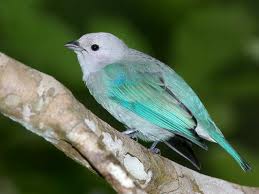
Are you a bird lover? If so then you’ll definitely want to check out Punctuated Equilibrium. The author, who goes by GrrlScientist, posts pictures of birds and then waits 48 hours to post the name of the bird as well as some general information on the species. This format serves double duty, bird experts or anyone with some knowledge of birds can test their skills and make a “game” out of it while those who won’t be able to guess can still read about the birds. Plus, who doesn’t like looking at beautiful pictures?
But even if birds aren’t really your thing, it’s still worth a look. While this blog is full of photos and information on different species of birds, there are also posts on a wide variety of other science topics. Some of the posts even include videos… a real life paramecium video game?! Being the owner of a weird box-loving cat, I also appreciated the short video clip, Simon’s Cat in ‘The Box.’
Something interesting I found was the post discussing Google’s new online science fair. This program allows kids from around the world to compete for the chance to win scholarships and find work opportunities. I’m not sure about the situations at other schools, but science wasn’t too popular at my high school; for students interested in science but feeling disappointed by the opportunities at their school, this is a great program. 
I think Punctuated Equilibrium is set up really well to draw in people without a science background. There are plenty of pictures which makes the blog seem less intimidating and I think people are less likely to just move on than if the page were full of just text. The author also writes in a way which is easy to understand rather than using a lot of jargon.

---------------------------------------------

As a self-admitted (and proud!) nerd, it’s not surprising that Observations of a Nerd caught my attention. The blog’s author, Christie Wilcox, is currently a graduate student and a perfect example of how science blogs are not only a valuable tool for communicating with the public but also how they can be extremely beneficial for those who take time to maintain them (she recently won a $10,000 scholarship for blogging!). I enjoyed the broad scope of themes, ranging from evolution to research… to makeup? No, that wasn’t a typo, and yes, it actually is on topic. It was also more interesting than I thought it would be.
Christie posted about National Geographic’s Great Migrations series and highlighted the focus of each episode. I hadn’t thought about it before starting this class, but series such as these are great for captivating audiences with science in a way that is accessible to those without a science background. This post also got me thinking…  am I the only one who gets made fun of for taking up tons of space on the DVR every time there’s a new science/nature series? If my family wasn’t already convinced that I’m a nerd, I’m sure the conversation about which narrator I like best sealed the deal. (Just in case you’re wondering, it's David Attenborough). In case you missed it, the Feast or Famine episode replays February 14th at 8pm.
Overall, I think Observations of a Nerd is a great blog to read while in our class; not only is it a science blog, but it’s also entertaining and has plenty of advice to keep in mind when starting our own blogs (It just so happens that the most recent post focuses on photography as a valuable communication tool). This blog was able to keep my attention through a good balance of science and personality. Those are just a few observations of this nerd.